
How Arrest Warrants Work in New Haven County
An arrest warrant is a judge's order that lets police take a person into custody. Connecticut prosecution materials lay out the steps. Police investigate. A prosecutor reviews the evidence, then sends an application and sworn probable-cause affidavit to a judge, who signs only if the legal standard is met. Probable cause means a fact-based reason to think a crime occurred and that the named person was involved. Where does the case land? Connecticut Superior Court is the only trial court of original jurisdiction, so a New Haven County address does not create a county court. More serious matters in the New Haven Judicial District may go through Part A, while GA courts handle many other felonies, misdemeanors, and infractions. The issuing court and the case type set the route.
New Haven County Arrest Warrant Review
The State's Attorney does not issue the warrant in New Haven County. Prosecutors review applications and track them in eProsecutor under the official prosecution standards, while a judicial authority makes the call on issuance. New Haven Police, other local departments, State Police, probation, and other authorized agencies can submit or investigate matters within their roles. The Division of Criminal Justice prosecution overview shows how investigation, prosecutor review, court action, and arrest stay separate.
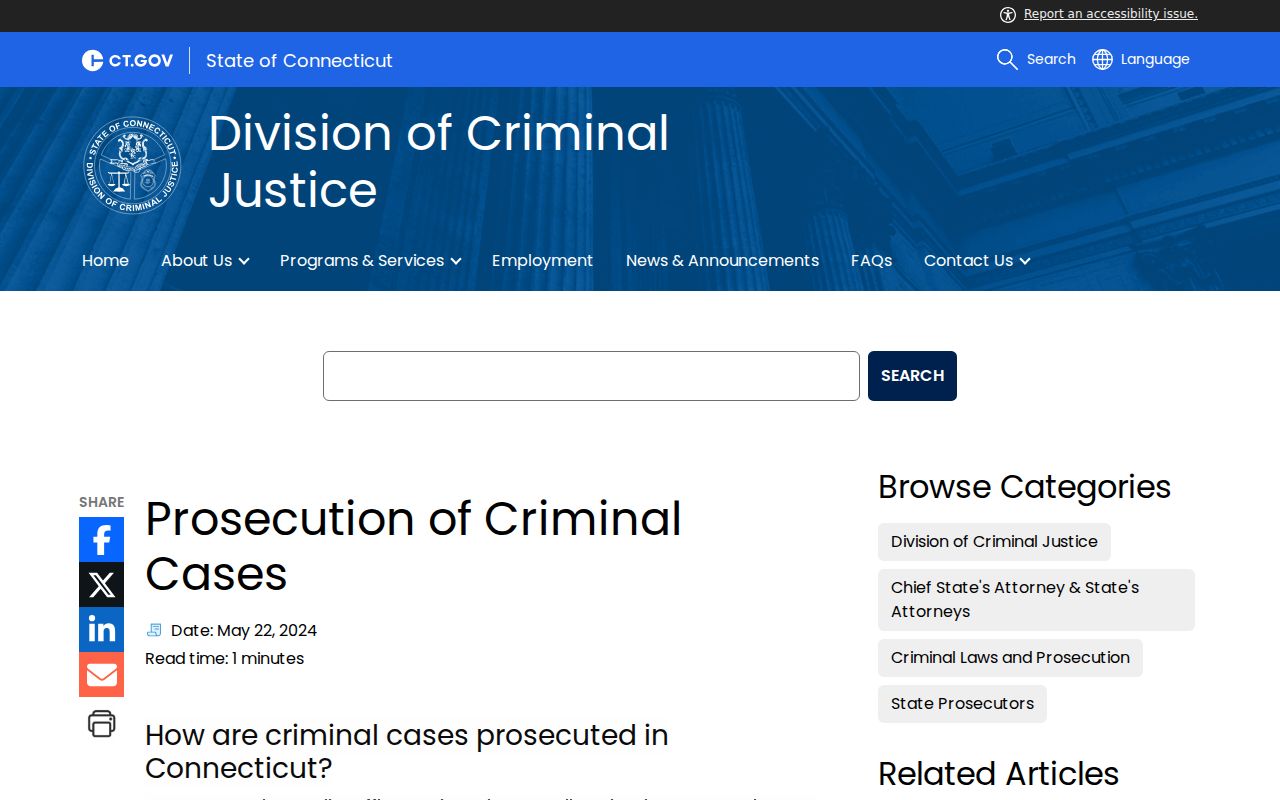
The official New Haven County page maps the process without exposing any person's case.
Arrest Warrants: What They Contain
A warrant must name the person, state the criminal charge, and come from a competent court. Depending on what is public in New Haven County, related records may include the application, sworn affidavit, signed warrant, return of service, arrest report, docket, and release order. Each record has its own custodian and may be sealed or redacted.
| Case or warrant identifier | Connects the process to the court matter; a safe example is N23N-CR-0000000-S. |
|---|---|
| Named subject | Identifies the person the order concerns, subject to protected-data rules. |
| Charge | States the alleged offense; it is not a conviction. |
| Issuing authority | Names the Superior Court judge or authorized judicial officer. |
| Issue date | Shows when judicial process was signed. |
| Release terms | Shows bond or other conditions only when set and publicly available. |
New Haven County Arrest Warrant Access
The public Judicial Branch docket can show case clues for New Haven County. It has no warrant-only checkbox. PRAWN, the Paperless Arrest Warrant Network, holds the operational warrant details for authorized criminal-justice agencies, and the public has no PRAWN account. A blank docket result therefore proves nothing about whether a warrant exists.
| Channel | What It May Show | Limit |
|---|---|---|
| Pending docket | Court, case, charge, date, public status | Not a live warrant index |
| Superior Court clerk | Case-specific procedure and court routing | No legal advice |
| Police Records | Releasable agency reports | Cannot recall a judge's warrant |
| PRAWN | Operational and service data | Agency access only |
Use the pending criminal docket search as a lead, then confirm with the New Haven County court or responsible agency.
How Warrants Get Served in New Haven County
Municipal police, Connecticut State Police, and other authorized agencies execute arrest warrants in New Haven County. There is no county sheriff warrant unit. PRAWN helps agencies identify who is responsible, record service attempts, and support custody processing across municipal lines, so a warrant can be served outside the city where the investigation began. New Haven Police policy adds that entering a privacy-protected location requires express warrant authority backed by probable cause that the person is there. Service may also happen during another lawful encounter or through a planned surrender. After arrest come booking and court release procedures. A judge or authorized court process controls bond and other release conditions. Note: Police execute process, but the issuing Superior Court controls recall and release terms.
New Haven County Arrest Warrant Courts
Use the court tied to the matter. New Haven GA 23 sits at 121 Elm Street, and the clerk public information line is 203-789-7461. New Haven Judicial District sits at 235 Church Street, with the clerk at 203-503-6800. Meriden GA 7 is at 54 West Main Street and answers at 203-238-6666. Waterbury criminal matters use 400 Grand Street and the clerk line 203-236-8100. West Haven routes to Milford GA 22 at 14 West River Street, where the clerk line is 203-874-1116. Check the Judicial Branch town-assignment map before travel, since residence alone does not identify the issuing court. Court Service Centers offer procedural help, and the directory lists public defender offices. Neither replaces counsel's advice on surrender, motions, or bond in New Haven County.
Arrest Warrants, Summonses, and Bench Warrants
These forms of process arise at different points. A new arrest warrant follows a probable-cause application. A summons orders an appearance without directing arrest. A bench warrant is court-issued process, often tied to a missed appearance or a broken court directive in New Haven County. Miss the required appearance on a summons and later court action can follow.
| Feature | Arrest Warrant | Summons | Bench Warrant |
|---|---|---|---|
| Core order | Take the named person into custody | Appear on the stated date | Take a person into custody for a court event |
| Typical basis | Probable cause of a new offense | Charge handled without initial custody | Missed appearance or court-order issue |
| Response | Counsel, confirmation, planned surrender | Attend as directed | Confirm and address with issuing court |
A civil or support capias is another distinct path in New Haven County. State Marshals may serve that process. Confirm its category and issuing authority before calling it a criminal arrest warrant.
New Haven County Warrant Review Data
The New Haven Judicial District's 2024 report offers unusual local context for New Haven County. Its warrant-type table lists 5,078 arrest applications reviewed in 2021, then 5,129 in 2022, 5,652 in 2023, and 5,293 in 2024. The four-year total is 21,152. These numbers measure prosecutor review only, not outstanding warrants, issued warrants, arrests, or convictions.
The report's type table and its submitting-agency table count different things. Each carries its own totals and scope. Treat them as separate figures, not pieces of one true count. New Haven Police, Meriden Police, Hamden Police, State Police, and Adult Probation all appear as submitting agencies, and that listing says nothing about which communities or people carry more risk.
New Haven County Arrest Warrant Records Requests
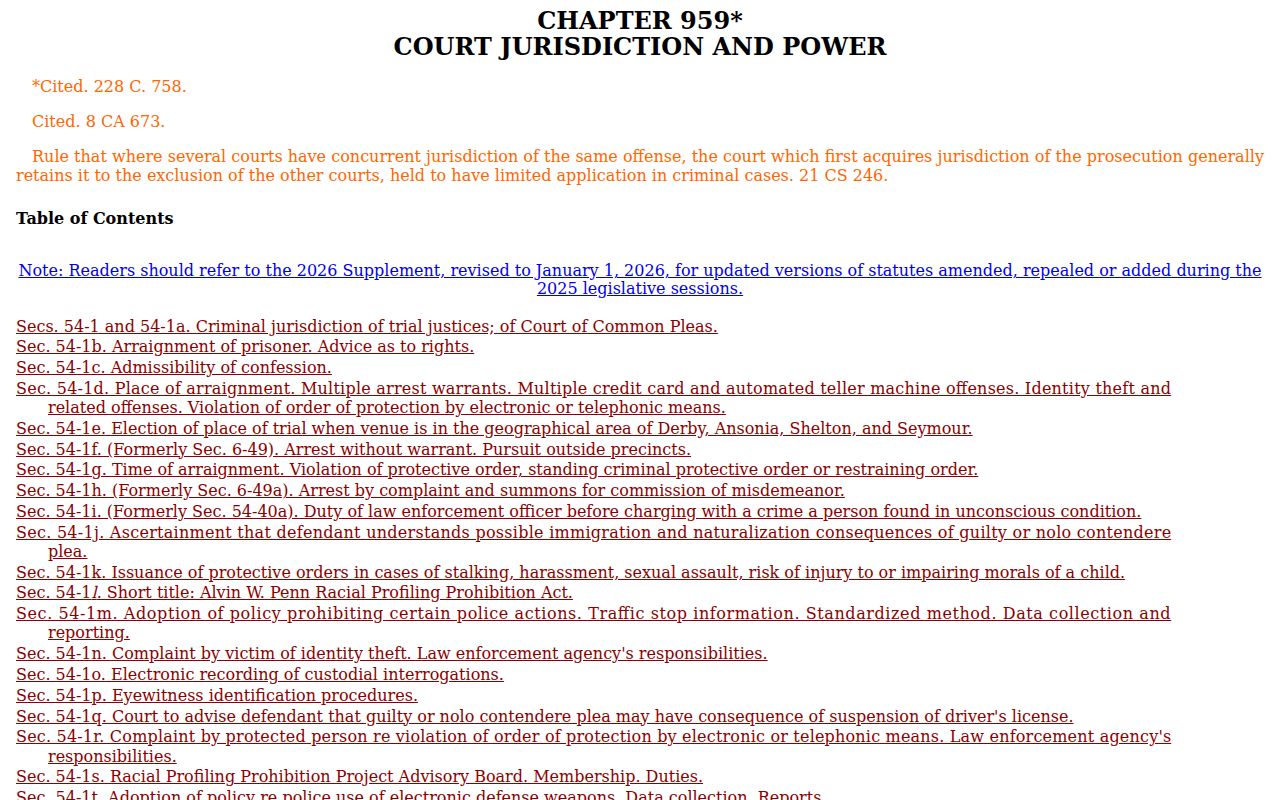
Connecticut's Freedom of Information law backs a request for a specific police record that already exists, though exemptions apply. Say exactly which document you want, such as a dated warrant application, an affidavit, a return, or an arrest report. Include the agency, the date range, and any known report or docket number. Asking for “all active warrants” is a different thing entirely. That asks an agency to build a new list, and no office is required to do it. The Connecticut criminal procedure statutes supply the primary-source background on how judges handle warrants in New Haven County and across the state.
Not every record gets released. Open investigations, court seals, erasure, juvenile rules, victim privacy, and statutory redactions can all bar disclosure, and New Haven County agencies apply these limits like any other. When only part of a file is withheld, ask for the segregable material that remains. A police report request cannot reach PRAWN, change release terms, or stop judicial process. Federal matters run on a different track. Use PACER, a courthouse public terminal, or the District of Connecticut clerk. Sealed federal warrants may never show up publicly, and state clerks have no way to confirm them.
Handling an Arrest Warrant in Your Name
Start with the likely court and the type of process. Search the public docket, read its update notice, and call the clerk through the official directory. Ask which procedures cover confirmation, counsel, surrender, appearance, and release. If the court sends you to police, call that agency's non-emergency or Records line in New Haven County for routing and surrender logistics. A phone promise that no warrant exists does not count for anything.
Important: Consult an attorney before appearing; counsel can confirm the warrant and help arrange surrender, bond review, or an appropriate court motion.
“Clear” can mean several things: service followed by release, a judicial recall, vacatur, or another court disposition. New Haven County has no universal recall form and no fixed bond amount. Paying money alone does not resolve a criminal arrest warrant. Only the court can change the conditions it set. Once you or a lawyer have acted, get current status straight from the issuing court rather than trusting an old docket screen.